


For most of 2026, the Atlantic hurricane season looked like it had taken the year off. June, July and August came and went. September, normally the peak of the season, passed without a single hurricane. Plenty of property owners noticed, and plenty of them relaxed.
Then, in the second week of October, Hurricane Isaias formed in the Gulf, strengthened fast, and made landfall on the Florida Panhandle as a Category 2 storm. The lesson is an old one, but Isaias delivered it with unusual clarity: a quiet season and a safe season are not the same thing. It only takes one storm.
A Historically Quiet Hurricane Season
The 2026 season really was remarkable. A strong El Niño pumped wind shear and dry air across the tropical Atlantic, two conditions that tear developing storms apart before they can organize. In a typical year, the Atlantic sees around five hurricanes and two major hurricanes by early October. This year, it saw none.
Isaias was the ninth named storm of the season, but the first to reach hurricane strength. It tied a 1905 storm for the latest-forming first hurricane on record. So how did it break through? Isaias didn’t form in the deep tropics, where the wind shear was still fierce. It formed over the western Gulf, where shear briefly eased, a pocket of moisture moved in, and exceptionally warm water gave it fuel. In that small window, it organized rapidly.
In other words, the big-picture conditions that kept the season quiet were real. They just weren’t everywhere, all the time. Nature only needed one opening.
What Hurricane Isaias Left Behind
Isaias came ashore near Destin, Florida, late on October 9 with winds near 105 mph. Storm surge reached 5.6 feet at nearby Panama City Beach.
The damage was widespread:
- Hurricane-force winds ripped roofs off hotels and condominiums along the Panhandle, including a hotel in Pensacola.
- Nearly 900,000 homes and businesses across Florida, Alabama and Georgia lost power.
- Lives were lost in Florida and Alabama, and the death toll continued to rise in the days that followed.
Even after the storm’s center moved inland, officials warned the flooding threat wasn’t over, with several more inches of rain forecast for already saturated ground. For the commercial properties in its path, the season’s statistics were irrelevant. What mattered was whether they were ready on October 9.
Forecasts Describe Season, Not Storms
Here’s the uncomfortable part: the seasonal forecasts were right. Forecasters predicted a below-average season, and that’s exactly what 2026 delivered. However, a seasonal forecast tells you roughly how many storms to expect across an entire ocean basin. It cannot tell you whether one of them will put four feet of water against your loading dock. “Below average” is a statistic, but a flooded parking garage is not.
That’s why flood protection can’t be planned around the forecast. It has to be planned around the possibility.
How Quiet Seasons Create Risk
Slow seasons rarely cause floods, but instead they cause drift – or complacency. When months go by without a threat, flood plans tend to slip in small, reasonable-seeming ways:
- “We’ll have time” becomes the plan and investing in flood protection gets bushed to next year.
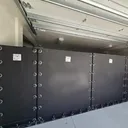
- Barriers sit in storage uninspected. Seals and gaskets degrade, hardware goes missing, and nobody finds out until deployment day.
- Deployment drills get skipped. The team that knew how to install the panels moves on, and the new team has never done it.
- Upgrades get pushed to next year. A quiet season makes it easy to justify deferring the budget line for protection you didn’t need this year.
None of these are dramatic failures. They’re the ordinary result of a season that gave everyone permission to stop thinking about water. Isaias is what happens when that permission runs out, and panic sets in.
Flooding Doesn’t Stop at the Coastline
Storm surge gets the headlines, but Isaias also carried heavy rain and flash flood risk well inland as it moved north toward the Appalachians. Saturated ground, overwhelmed drainage and rising rivers put properties at risk that never saw a single wave.
If your flood plan assumes you’re safe because you’re not on the beach, it’s worth revisiting. Here are a few facts worth knowing:
- Rain is now the bigger killer – Across the five decades through 2012, storm surge caused nearly half (49%) of direct hurricane deaths in the U.S., and rainfall-driven freshwater flooding caused over a quarter (27%). In the most recent decade NHC analyzed, the share flipped: about 57% of direct tropical cyclone deaths were drownings from freshwater (rainfall) flooding.
- Most deaths happen away from where the storm lands – About 80% of direct US hurricane fatalities since 1970 occurred outside of landfall counties, with most of these fatalities caused by inland flooding.
- Each extra inch of rain is deadly – One study found that one-inch and one-knot increases in rainfall and wind increase total fatalities by 28 and 4%. That means rainfall is far more deadly per unit than wind speed.
- A weak storm can still be deadly – NHC’s Ed Rappaport pointed to a case where a weak tropical depression (1994 Alberto) claimed about 30 lives well inland over the southeastern states.
- Harvey is the clearest example. – Hurricane Harvey in 2017 had 68 direct deaths, 65 of which were due to freshwater flooding in Texas.
- Flood maps miss a lot – FEMA’s own data show that about 29% of National Flood Insurance Program claims from 2014–2024 came from properties outside high-risk flood areas. After Hurricane Debby, First Street found that 78% of properties flooded were outside flood zones A or V, with $9.7 billion of Debby’s damage occurring outside FEMA high-risk zones.
- Rainfall after Hurricane Isaias – After landfall, DeSantis warned that flooding remained a concern, with 4 to 8 inches of rain forecast across the Florida Panhandle and Big Bend through the weekend. Officials also kept teams ready because heavy rain could cause additional flooding, particularly in already saturated parts of North Florida.
The Season Isn’t Over
The Atlantic hurricane season officially runs through November 30, and atmospheric conditions often shift considerably in October as temperatures fall. Isaias was the first hurricane of 2026. There’s no rule that says it has to be the last.
If your property’s flood readiness slipped this year, now is the time to close the gap:
- Inspect your flood barriers
- Check seals, gaskets, fasteners and mounting points
- Replace anything worn
- Confirm where every panel, hardware, and set of instructions is
- Run a deployment drill and time it
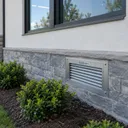
- Review your vulnerable points, including entrances, loading docks, parking garages, elevator pits and equipment rooms are where water finds its way in
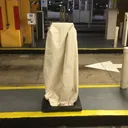
- Consider passive protection systems that deploy automatically
- Build a proper flood plan, including before the storm, during, and after
At Flood Risk America, we design, engineer and test flood protection systems in our own in-house test facility, under real-world pressure, to a zero-seepage standard. Because the only thing a quiet season guarantees is that the next storm will catch somebody unprepared. Don’t let it be your building.