


A warehouse is one of the hardest building types to protect from flooding, and one of the most expensive to get wrong. Wide loading docks, roll-up doors, expansive floor area, and drains that connect straight to overtaxed stormwater systems create dozens of entry points for water without the right flood protection systems.
Add high-value inventory sitting at floor level, and a few inches of flooding can turn into a six- or seven-figure loss. The flood risk today is even higher for warehouses because of a changing climate. The right flood protection systems are what stand between a storm and that loss.
Here’s what effective warehouse protection looks like.
Flood Protection Systems That Work for Warehouses
1. Loading Dock and Large-Opening Barriers
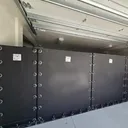
Loading docks are the single biggest vulnerability in most warehouses. They’re wide, low, and open directly to the outside. Flood panels and modular barrier systems seal these openings with a watertight barrier that deploys quickly. These types of flood protection systems provide critical flood prevention when a facility needs to keep receiving shipments until the last possible moment.
2. Door and Roll-Up Protection
Personnel doors, roll-up doors, and drive-in entrances each need their own defense. Removable panels handle openings that stay clear day-to-day, while permanently installed flood protection systems suit high-risk entrances that can’t rely on someone being present to deploy protection in time.
3. Drain and Backflow Defense
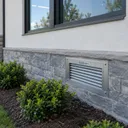
Warehouse floors are riddled with drains, and during heavy storms those drains can run backward, pushing water up into the facility even when every door is sealed. Floor drain protection blocks backflow, closing a gap that perimeter barriers alone can’t cover. It’s also impact-resistant, so forklifts and vehicles can operate over protected drains without damage.
4. Equipment and inventory shielding
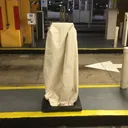
Not everything in a warehouse can be moved before a storm. Fixed equipment, electrical enclosures, and critical systems can be protected in place with dedicated covers and boxes, keeping the operation recoverable even if the surrounding area takes on water.
Why Flood Protection Systems Beat a Single Product
The word that matters here is systems. Warehouses fail when they protect the obvious openings and forget the drains, or seal the doors and leave equipment exposed. Water exploits whatever you skipped. Effective flood protection systems treat the building as a whole: every opening, every drain, every fixed asset accounted for and layered so one weak point doesn’t compromise the rest.
Know what’s actually at risk inside:
- A warehouse isn’t an empty box. It holds inventory stacked at floor level, forklifts and machinery, electrical panels and HVAC, loading docks, and often office and records space toward the back.
- Each of these fails differently in a flood, and each needs to be part of the plan, not an afterthought once the water’s already in.
Speed matters as much as coverage
- Warehouse operations often can’t shut down early, so protection has to deploy fast.
- FRA’s products are engineered to be set up by on-site staff, without heavy equipment or specialist crews – coverage you can actually get in place before the water arrives.
Where to Find Warehouse-Level Flood Protection
Warehouse-level flood protection means serious protection – not a generic product pulled off a shelf and hoped to hold. The stakes are different at this scale: you’re not shielding a doorway, you’re defending inventory, equipment, electrical systems, and continuity of operations, often across a footprint with multiple points of entry and no room for error.
Flood Risk America designs flood protection for warehouses, distribution centers, and processing facilities that meets FEMA, NFIP, U.S. Army Corps of Engineers, and FM Approval standards, backed by 24/7 deployment support.
Protecting a warehouse or distribution center? Contact Flood Risk America for flood protection systems built around your facility’s real exposure.