


In late October, El Niño pushed water levels along the California coast to the highest readings ever recorded at tide gauges in San Diego, La Jolla, Los Angeles and Santa Barbara. Huntington Beach declared a local emergency after more than 100 properties were damaged. Saltwater closed Pacific Coast Highway and flooded homes and businesses from Long Beach to Newport.
Many of those property owners prepared. They stacked sandbags, laid tarps, and sealed gaps with tape. The water came in anyway.
The next round is already on the calendar, and forecasters expect it to run higher. If you own or manage a property on the California coast, here’s what’s coming, why October’s quick fixes failed, and which flood panels and flood barriers in California actually hold up against king tide flooding.
When Are California’s Next King Tides?
NOAA predicts above-normal high tides in two windows this winter:
- November 22 to 27, 2026 (Thanksgiving week)
- December 22 to 26, 2026 (Christmas week)
Both windows fall during perigean spring tides, when the moon is full and closest to Earth. The December tides also coincide with the winter solstice and Earth’s closest approach to the sun, which pull tides higher still. Local forecasters have warned the holiday tides could reach about 8 inches above the levels that flooded Huntington Beach and Newport Beach in October.
The reason behind record-breaking king tides in California is that El Niño is a multiplier. It sends Kelvin waves, pulses of warm water, up the West Coast that can raise sea level 6 to 12 inches for weeks at a time. NOAA expects more of them through the winter, along with wetter-than-average conditions in Southern California. Heavy rain during a king tide is the worst case: storm runoff has nowhere to drain while the ocean pushes in from the other side.
This isn’t a one-off. Los Angeles has logged 12 coastal flood days in 2026, breaking a record of nine set in 1983, and that count doesn’t yet include October. For the full picture of what’s driving it, see why California flooding is getting worse.
Why Sandbags and Tape Failed in October
The October floods were a real-world test of DIY flood protection, and it didn’t go well.
In Huntington Beach, one bayfront homeowner who had lived there since the 1970s told ABC7 he had sealed every opening with tape. The water simply rose above it. On Balboa Island, property owners set out sandbags, tarps and temporary barriers, and water still reached their entryways and patios.
Those failures come down to three problems:
- They’re not tall enough – Sandbags and tape are sized for nuisance flooding, a few inches of water. October’s tides set records, and the holiday tides are forecast to run higher. Protection has to be sized for the water you’re expecting, not the water you’ve seen before.
- They leak – Sandbags are porous. Even a well-built wall seeps, and gaps between bags, at corners and against uneven ground let water through. Tape and tarps fail at the edges as soon as water pressure builds.
- They don’t hold up over days – October’s flooding lasted four days in a row. Hours-long exposure to pressure and saltwater breaks down improvised seals, and every tide cycle tests them again. A barrier has to survive the whole event, not just the first high tide.
Where Floodwater Gets Into a Building
The most useful lesson from October came from Sunset Beach. The seawall there held. Water never went over the top. Instead, it came up through storm drains and seeped around the edges of the barrier, and Pacific Coast Highway still flooded to knee depth.
The same thing happens at the building level. Protecting the front door isn’t enough if water has another way in.
Before choosing a flood barriers in California for your property, map every entry point:
- Doors and storefronts, the most obvious opening and usually the first to flood. See door protection.
- Garage and parking entrances, wide openings at or below grade where water collects fast. See parking garage protection.
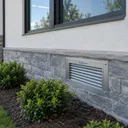
- Floor drains, which reverse when the outside water level rises and let water up from below. See floor drain protection.
- Windows and glass at or near street level. See window and glass protection.
- Below-grade spaces and equipment, including basements, elevator pits and electrical boxes. See underground space protection and elevator protection.
Effective flood protection covers every path water can take.
Flood Barriers In California That Work
The right flood barrier depends on three things: the opening you’re protecting, how much warning you’ll get, and whether someone will be on site to deploy it. King tides have one big advantage over hurricanes and flash floods. The dates are known weeks in advance, so planned protection is realistic.
Public agencies are already moving. San Diego’s Metropolitan Transit System has spent more than $700,000 preparing for El Niño, including special flood barricades, according to the San Diego Union-Tribune. Here’s how to match barriers to your property. For a deeper comparison of barrier types, see our guide to the 4 types of flood barriers.
Waterfront Homes and Small Businesses
For bayfront homes, beach cottages and small shops like those flooded on Balboa Island and in Sunset Beach, temporary barriers are often the most practical choice. They’re set up ahead of a forecast tide and stored when it passes.
See more on residential flood protection.
Commercial Buildings and Storefronts
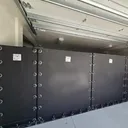
For restaurants, retail, hotels and offices, protection needs to fit specific openings and seal reliably. Engineered panels are installed into door and window openings before a flood.
- The FRA Flood Panel is custom-fit to each opening, including doors, windows and elevators. Check out this installation we did in San Diego, California.
- The PC Clear Panel offers a clear option for storefronts.
- Permanent flood doors and swing-hinged flood gates suit buildings that flood repeatedly and need protection that’s always in place.
See more on commercial and retail flood protection.
Properties Without Staff On Site
King tides peak on the ocean’s schedule, not yours, and flooding often lasts for days in a row. If no one will be there to deploy a barrier, passive protection is the answer.
The passive hinged flood barrier and passive automatic flood gate rise on their own as water arrives, with no one needed to set them up.
Parking Garages and Equipment
Underground parking and ground-level equipment take on water first and cost the most to repair. Parking garage protection covers wide vehicle entrances, and an electric box cover shields electrical equipment from saltwater, which corrodes fast once it gets in.
Whatever you choose, check that it’s actually certified. Our guide on FM Approved flood barriers explains the difference between “tested” and “certified.”
To see the full range, browse our flood barriers.
Inland California: Rain, Debris Flows and Burn Scars
Coastal properties aren’t the only ones at risk this winter. NOAA’s outlook calls for a wetter-than-average season across Southern California, and inland flooding behaves differently from tidal flooding.
Last Christmas, atmospheric rivers dropped nearly a month of rain in two days on parts of Northern California, washing out roads and forcing water rescues. Near wildfire burn scars, soil that has lost its vegetation repels water instead of absorbing it. Even moderate rain can trigger fast-moving debris flows.
Inland flooding usually gives less warning than a king tide, so the barrier choice shifts. Passive barriers that deploy themselves, and permanent protection for openings that flood repeatedly, matter more when the water can arrive within hours of a forecast. Debris flows also carry mud, rock and branches, so protection needs to be rated for impact and pressure, not just standing water.
Get Flood Barriers in California For Your Property
King tides come back every winter, and flooding along the California coast is only getting more frequent. Whatever you do now protects you this season and every one after it. Here’s where to start:
- Find your flood height – Check how high water reached your property in October. Then use NOAA’s high tide flooding outlook for your area, and plan for the holiday tides to run higher.
- Map every opening – List doors, garage entrances, floor drains, windows and below-grade spaces, with the width of each.
- Decide who deploys – If someone will reliably be on site before each tide, temporary barriers work. If not, plan for passive or permanent protection.
- Get a site-specific recommendation – Every building floods differently. A flood expert can match barriers to your openings, flood height and timeline.
“October was a preview, not a one-off. The properties that come through this winter dry will be the ones whose owners measured their risk and picked a plan. It’s important to start now, even if your protection isn’t fully in place by the 22nd.”
— Stephen Gill, Managing Partner, Flood Risk America
We’ve been hearing from California property owners since the October floods. If you’re wondering what will actually hold, and whether it can be in place before the next tide, contact Flood Risk America.