



Rewind ten years, and “portable flood protection” meant something entirely different. For most property owners, it meant sandbags – heavy, labor-intensive, single-use, and only marginally effective. The alternatives weren’t much better: makeshift plywood boards, improvised plastic sheeting, or early-generation barriers that lacked the engineering, materials, and sealing technology that define the category today.
The appeal of modern portable flood barriers is obvious: protection you can deploy when you need it, store when you don’t, and use across multiple locations or openings as the situation demands. They’re the most flexible option in the flood protection toolkit – and in 2026, the category has matured significantly.
What Does “Portable” Actually Mean in Flood Protection?
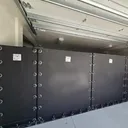
It’s worth defining the term, because not every removable flood barrier is truly portable. Custom-engineered flood panels, for example, are precision-fitted to a specific doorway or opening – they can be taken down and stored, but they’re built for one location and won’t fit anywhere else.
FRA offers those too, and for permanent, high-priority openings they’re often the right choice. But that’s not what this guide is about. Portable flood barriers, in the true sense, means they aren’t tied to any single opening or property: they can be deployed across different locations, reconfigured to different lengths and layouts, and moved wherever the flood risk is. That flexibility of portable flood barriers is the defining feature of every product covered here.
What to Look for in Portable Flood Barriers
Before comparing products, it helps to know the criteria that separate reliable portable flood barriers from one that fails when you need it most:
- Flood depth rating – every barrier should have a certified maximum water depth it can withstand. This should come from testing, not just manufacturer claims.
- Deployment speed – how long does it take to set up, and how many people does it require? Some barriers need significant lead time; others deploy in minutes.
- Seal reliability – the weakest point of any portable flood barrier is where it meets the ground and the building. A poorly sealing portable barrier is worse than no barrier, because it creates a false sense of security.
- Weight and storage – portable flood barriers need to be stored somewhere. Weight and storage footprint matter, especially for large commercial properties protecting multiple openings.
- Compliance – does the product meet FEMA/NFIP standards? This matters for insurance and for confidence in the product’s performance claims.
The Best Portable Flood Barriers in 2026
1. Water-Filled Flood Barriers – One of the most practical portable options available. They’re shipped empty, meaning they’re lightweight and easy to store. When a flood threatens, they’re filled with water on-site using a garden hose or fire hydrant and their own weight creates a stable, water-resistant barrier.
Best for:
- Perimeter protection around buildings
- Blocking flood entry across wide areas
- Large commercial properties that need to quickly establish a defensive perimeter
2. Aqua-Fabric Flood Barrier – The Aqua-Fabric Flood Barrier is designed for simplicity. Its lightweight construction allows a single person to deploy it in approximately 10 minutes. Simply position the barrier where protection is needed, and it forms an effective flood defense that keeps water, sand, and debris at bay. When the threat passes, the barrier folds down for compact storage and is fully reusable.
Best for:
- Pools and hot tubs
- Properties with limited storage
- Quick deployment scenarios
3. Foldable Flood Barrier System – Takes a clever approach to perimeter protection: it uses the floodwater against itself. As water rises against the vertical panel, it fills the front-facing apron lying on the ground, and the weight of that captured water acts as ballast – the harder the flood pushes, the more firmly the barrier holds. The system deploys in minutes across grass, sand, concrete, asphalt, or compacted soil, making it ideal for mixed-surface perimeters like driveways that transition into lawns. When the water recedes, the whole system folds down, rolls up, and stores away.
Best for:
- Perimeter flood protection
- Rapid deployment scenarios
- Properties that need a reusable and portable solution
Choosing the Right Portable Flood Barriers
No two properties flood the same way, which is why the smartest starting point isn’t a product – it’s a site-specific flood risk assessment. A professional assessment identifies where water actually threatens your property: the direction of flood approach, vulnerable openings, low points in the perimeter, and drainage weaknesses that aren’t obvious until water is already inside. Only then can you match the right barriers to the right vulnerabilities.
From there, the most effective portable flood protection strategies take a multi-layered approach, combining products so each layer covers what the others can’t:
- Perimeter – Water-filled barriers to redirect and block flood approach before it reaches the building
- Openings – Flood panels or foldable barriers for doors and access points – the most common failure points
- Secondary access points – Aqua-fabric barriers for lower-priority openings or quick-deployment scenarios
Layered together, these create redundancy: if one line of defense is overtopped or breached, the next is already in place.
Contact FRA for help building a portable flood barrier strategy that fits your property.