

Few states know flooding the way Louisiana does. Sitting largely at or below sea level, wrapped by the Gulf, the Mississippi River, and thousands of miles of bayous and low-lying wetlands, Louisiana flooding risk comes from nearly every direction – storm surge, river overflow, tropical systems, and the kind of slow, heavy rainfall that overwhelms drainage in a matter of hours. For property owners across the state, Louisiana flooding isn’t a rare event to plan around. It’s a recurring condition to build against.
At Flood Risk America, we work with commercial property owners, municipalities, and facility teams throughout the Gulf region, and the pattern is consistent: the buildings that come through a flood intact are the ones that were physically protected before the water arrived. Insurance helps you recover. Flood barriers help you avoid the loss in the first place.
Why Louisiana Flooding Is So Persistent
Louisiana’s exposure is structural, not seasonal. Much of the state’s developed land relies on levees, pumps, and drainage systems that were engineered decades ago for storms smaller than the ones now common. Add subsiding land, rising seas, and heavier rainfall events, and the margin for error keeps shrinking.
That combination produces several distinct flood threats:
- Storm surge pushing Gulf water inland during tropical systems
- River and bayou overflow when upstream rainfall drains south
- Rainfall flooding in urban areas where paved surfaces can’t absorb water
- Drainage and pump failure during high-volume events
A property can sit outside a designated high-risk zone and still take on water from any one of these. That’s why relying on a flood map alone leaves most owners under-protected.
How Flood Barriers Change the Outcome
Flooding is unpredictable, but your response to it doesn’t have to be. There’s almost always something you can do ahead of time to minimize the damage, or avoid it entirely, and flood barriers are one of the most dependable ways to do it.
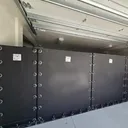
Flood barriers are engineered systems designed to keep water out of a building’s most vulnerable openings, including doors, garage entries, loading docks, stairwells, and below-grade access points. Unlike sandbags, which are labor-intensive and marginally effective, modern barriers are built to seal, hold, and perform against real hydrostatic pressure. The payoff is proactive protection: fewer costly repairs, less downtime, and a building that’s ready before the water ever arrives.
FRA’s product range spans both passive and deployable solutions, so protection can match the property:
- The FRA Flood Panel – Custom, temporary panels that are deployed when needed
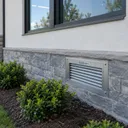
- Passive automatic floodgates that deploy on their own as water rises – no crew, no warning required
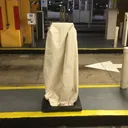
- Passive hinged flood barriers that stay out of the way until needed
- Foldable flood barrier systems for wide openings
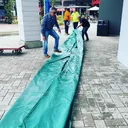
- Water-filled barriers for perimeter and site-level defense
Every FRA system is engineered to exceed FEMA and NFIP guidelines, U.S. Army Corps of Engineers standards, and FM Approval requirements – which matters in a state where flood events regularly test the difference between “rated” and “actually holds.”
Protection That Fits the Property
The right approach depends on the building. A commercial parking structure, a hospital, a condo tower, and a single retail storefront each face flooding differently, and each needs a plan built around its real exposure points. That’s the work we do before recommending a single product: assess how water is most likely to reach the building, then design protection around those paths.
For Louisiana property owners, the takeaway is simple. The flooding will keep coming. The question is whether your building is ready for it.
If you own or manage property in Louisiana, contact Flood Risk America for a flood assessment built around your site’s specific risk.