


When a hospital floods, the damage goes far beyond the building. Power systems can fail. Elevators can be shut down for weeks. Patients can be displaced to other facilities. Care can be interrupted at the worst possible moment. That is why designing and installing flood barriers around hospital facilities is one of the most critical and complex projects in the flood protection industry.
In early 2026, Flood Risk America completed exactly this kind of project at Shriners Children’s Hospital Tampa, one of Florida’s most respected pediatric care facilities. Here is a closer look at how we approached the project, what made it unique, and what other healthcare facilities can learn from it.
Why Shriners Children’s Hospital Needed Flood Protection
Shriners Children’s Hospital Tampa is located right along the Florida Gulf Coast, an area facing intensifying flood risk. Rising sea levels, longer hurricane seasons, heavier rainfall, and stronger storm surges have made coastal flood events more frequent and more severe in the Tampa Bay region. For a hospital that has to remain fully operational at all times, even a relatively small flood event could compromise care delivery for the children and families who depend on it.
Shriners’s leadership recognized that proactive flood protection was no longer optional. They needed a solution that would protect the most vulnerable points of the facility without disrupting daily operations or interfering with emergency response.
The Challenge: Installing Flood Barriers Around an Active Hospital
Designing flood barriers around a hospital is fundamentally different from protecting a warehouse, retail center, or office building. Hospitals never close, emergency vehicles need uninterrupted access, patients, families, and staff move through entryways constantly, and closing down elevators is not an option.
That meant the FRA team had to deliver a system that could:
- Deploy quickly when a flood event approached
- Install without permanent structural alterations that could interfere with daily care or emergency response
- Be operated by hospital staff without specialized training
- Integrate cleanly with the facility’s existing infrastructure
- Provide reliable, watertight protection across multiple entry points simultaneously
The Solution: FRA’s Patented Flood Panel System
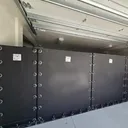
After an on-site flood risk assessment, FRA designed and installed a customized version of its patented FRA Flood Panel system across the hospital’s most vulnerable areas. The panels are engineered for rapid deployment, watertight performance, and easy storage between events. Because they are removable rather than permanent, they do not change the look or function of the building during normal operations.
The system was deployed across three critical zones:
- Parking garage entrances and ramps – Floodwater entering a parking garage can damage vehicles, flood electrical equipment, and compromise lower-level infrastructure. The flood barriers around the hospital’s garage entrances keep that water out.
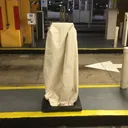
- Elevator access points – Elevators are one of the most expensive and disruptive systems to repair after a flood event. Protecting elevator access points prevents both the direct damage and the lengthy downtime that follows.
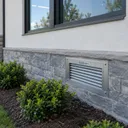
- Main entryways and exterior doors – Every primary entrance was fitted with a custom-engineered flood panel that blocks water at the most vulnerable points while preserving normal access during everyday operations.
Each panel was custom-fabricated to fit the exact dimensions of its opening and engineered to integrate seamlessly with the hospital’s existing architecture. The marine-grade, corrosion-resistant materials are built to handle Florida’s coastal environment for the long term.
Why This Project Matters Beyond Tampa
The Shriners installation is a clear example of what modern flood barriers around hospital facilities can look like when the solution is engineered to fit the building, not the other way around. Off-the-shelf flood products often fall short for healthcare facilities because they cannot accommodate unusual opening sizes, integrate with existing emergency systems, or deploy quickly enough to be useful during a real storm.
Custom flood protection makes the difference. By starting with a detailed site assessment, designing for the hospital’s specific operational needs, and using American-made, FEMA-compliant materials, FRA delivered a system that protects the building, the patients, and the continuity of care.
As Stephen Gill, founder and Managing Partner at Flood Risk America, put it: “Many families rely on Shriners Children’s Hospital for life-changing care, which we don’t take lightly.” That is the standard FRA brings to every healthcare project.
What Other Hospitals and Medical Centers Should Know
If you manage a hospital, surgical center, long-term care facility, or any other medical building, here are a few lessons from the Shriners project worth applying:
- Start with an on-site flood risk assessment – Every facility has unique vulnerabilities. A walkthrough with a flood protection specialist will surface entry points and equipment exposures you may not have considered.
- Plan for elevators and underground spaces – These are often the most overlooked and most expensive vulnerabilities.
- Choose solutions that match your operational reality – Hospitals need products that can be deployed quickly by existing staff without disrupting patient care.
- Insist on certified, tested products – Look for hydrostatically load-tested products with documented compliance to FEMA standards.
- Build in maintenance from day one – Flood barriers are only effective if they are inspected, maintained, and ready when an event approaches.
Flooding is becoming a year-round concern for healthcare facilities across the country, especially in coastal and low-lying regions. Installing the right flood barriers around hospital and medical centers is one of the most cost-effective ways to protect the building, the equipment, and most importantly, the people inside.
To learn more about flood protection solutions for healthcare facilities or to schedule an on-site assessment for your medical center, contact the Flood Risk America team today.