

Miami is no longer just America’s playground. It is becoming one of the country’s most consequential business destinations, a magnet for finance, technology, real estate, and international commerce. The skyline is rising fast. Cranes crowd the waterfront. Developers are pouring billions into office towers, mixed-use complexes, luxury residences, and commercial hubs that signal a city in full transformation.
But Miami sits at the intersection of ambition and vulnerability in a way that few cities in the world can match. It is one of the most flood-exposed metropolitan areas on the planet. Sea levels are rising. Storms are intensifying. King tide flooding that once happened a handful of times per year now occurs dozens of times annually. Streets flood not from hurricanes but from ordinary rain.
The developers who will succeed in this market over the next decade are not just the ones who build the tallest towers or secure the best financing. They are the ones who build smart – who treat flood resilience not as an afterthought, but as a foundational design principle.
Flood Risk America is already working with those developers. Here is why it matters, and why now is the moment to act.
Miami’s Incredible Transformation
The numbers tell the story of a city that has fundamentally changed. Miami-Dade County’s GDP has grown dramatically over the past decade, fueled in part by an influx of financial firms, tech companies, and international businesses that relocated from higher-cost cities like New York and San Francisco.
Miami’s transformation is visible neighborhood by neighborhood:
- Brickell – Once a quiet stretch of bank headquarters, now called the “Wall Street of the South”.
- Wynwood – Once an industrial warehouse district, now a global destination for art, hospitality, and creative commerce.
- The Design District – Now one of the most valuable retail corridors in the country.
New construction has followed. According to data from the Miami Downtown Development Authority, billions of square feet of commercial and residential space have either been completed, broken ground, or entered the planning stages across Greater Miami in recent years. The development pipeline shows no sign of slowing.
This transformation brings enormous opportunity – and enormous responsibility. Every building that rises in Miami today will face a more challenging climate environment in ten, twenty, and thirty years than it does at the moment of construction. Developers who ignore this reality are not just taking an environmental risk. They are taking a financial one.
The buildings going up in Miami today will outlive the flood assumptions they were designed around, unless those assumptions are built to evolve.
Why Flood Planning Belongs at the Beginning of Construction, Not the End
There is a persistent misconception in development that flood protection is a feature to be added late in the process – something addressed during fit-out, or after the first significant storm. This approach is not just inefficient – it is expensive, and in many cases, it produces results that are fundamentally inferior to what proactive planning would have achieved.
Here is why integration from the start is so critical:
- Structural decisions made early are expensive to reverse – The placement of mechanical and electrical systems, the design of below-grade spaces, the choice of building materials, the drainage systems embedded in the foundation – all of these decisions are made in the early phases of a project. Retrofitting flood protection into a building that was not designed with it in mind often requires costly structural modifications that would have been trivial, or even free, to address at the design stage.
- Flood protection shapes the building envelope. – Effective flood planning is not just about barriers placed at doors and windows. It involves thinking about how water moves around and through a site, how the grade of the land interacts with adjacent streets and drainage infrastructure, where critical systems should be located vertically in a building, and how the base of the structure handles inundation. These are architectural decisions, not afterthoughts.
- Regulatory requirements are tightening. – Miami-Dade County and the City of Miami have both adopted and continue to strengthen building codes that reflect flood risk. FEMA’s flood maps are being updated. Minimum finished floor elevation requirements are increasing in many areas. Developers who build to today’s minimum requirements may find themselves out of compliance, or simply uncompetitive, as those requirements evolve over the life of a building.
- Insurance costs are rising and becoming harder to obtain. – The insurance market for Florida properties has experienced significant stress in recent years, with multiple carriers reducing exposure or exiting the market entirely. Buildings that demonstrate proactive flood resilience through documentation, certified products, and thoughtful design are better positioned to secure coverage at reasonable rates. Those that cannot demonstrate flood preparedness face an increasingly difficult market.
- Tenants and buyers are asking the right questions. – Sophisticated commercial tenants – particularly the financial and technology firms that have driven Miami’s transformation – are increasingly conducting flood risk due diligence before signing leases. High-end residential buyers in South Florida are aware of flood risk in ways they were not a generation ago. Buildings with strong flood resilience credentials have a competitive advantage in leasing and sales that will only grow over time.
What Happens When Developers Don’t Plan for Flooding
The cost of failing to integrate flood planning is not theoretical. It plays out in Miami and across South Florida in ways that are measurable, expensive, and sometimes irreversible.
- Mechanical and electrical system failures. – The most common and most costly consequence of flood events in commercial buildings is damage to mechanical, electrical, and plumbing systems. Elevator equipment rooms, transformer vaults, emergency generators, and HVAC systems placed at grade or below grade are exposed to floodwater during even moderate events. Replacing this equipment is not just expensive – it takes buildings offline for weeks or months, creating significant business interruption losses and tenant liability.
- Structural damage that compounds over time. – Repeated flooding, even at relatively low levels, degrades building materials, accelerates corrosion in concrete and steel, undermines foundation integrity, and creates conditions for persistent mold and air quality problems. Buildings that flood regularly experience accelerated depreciation that erodes long-term asset value.
- Reputational and legal exposure. – When a building floods, tenants lose business. Their inventory is damaged. Their operations are disrupted. In commercial leases that contain business interruption protections or make representations about the physical condition of the property, flooding events can generate significant legal liability for building owners and developers. The reputational cost – in terms of future leasing and resale value – can be equally significant.
- Stranded assets. – In the most severe cases, buildings in flood-prone areas that were not designed with resilience in mind become functionally stranded. They are difficult to insure, difficult to finance, and difficult to sell. As climate projections continue to tighten and lenders and insurers apply more rigorous flood risk assessments to their underwriting, this risk will only grow.
In Miami’s market, a building that floods repeatedly is not just a problem – it is a liability that can define the asset for its entire useful life.
How Flood Risk America Helps Developers Build Smarter
Flood Risk America works with developers at every stage of the construction and ownership lifecycle. Our approach is not to sell a single product or provide a single consultation – it is to function as a comprehensive flood resilience partner, from early design through long-term operations.
Construction Consulting
Our team works directly with architects, engineers, and construction managers during the design and planning phases to identify flood vulnerabilities before they are built in. We review site plans and architectural drawings to assess how water will move around and through a property. We provide recommendations on finished floor elevations, the placement of critical building systems, the design of below-grade spaces, drainage design, and material selection.
This consultation often pays for itself many times over by preventing the need for costly modifications later. Developers who engage us early find that flood-resilient design does not add significant cost to a project – it redirects decisions that were going to be made anyway toward smarter outcomes.
Flood Products and Protection Systems
Flood Risk America manufactures and installs a comprehensive range of flood protection products designed for commercial and residential construction. Our solutions are engineered for the demands of South Florida’s climate and built to integrate seamlessly with modern construction standards. Our product range includes:
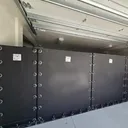
- FRA Flood Panels for doors, windows, elevators, parking garages, underground spaces, electrical equipment, and floor drains.
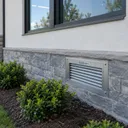
- Passive automatic flood barriers that activate without manual intervention.
- Emergency exit flood doors that maintain egress compliance while providing flood protection.
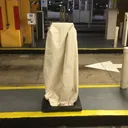
- Electric box cover to keep water out of electrical panels.
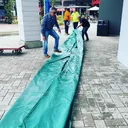
- Water-filled flood barriers for perimeter protection during storm events.
- Pool covers using smart anchoring system for a watertight fit.
Our products are not off-the-shelf solutions applied generically. Every installation is designed around the specific geometry, use, and flood exposure of the building in question. We work closely with construction teams to ensure that flood protection integrates with the architecture rather than being bolted on as an afterthought.
Flood Planning and Risk Assessment
Beyond products and construction consulting, Flood Risk America provides comprehensive flood risk assessments for development sites and existing buildings. We:
- Analyze FEMA flood zone designations
- Evaluate the limitations of current flood maps in the context of climate projections
- Assess site-specific vulnerabilities
- Develop flood response and mitigation plans that building management teams can actually execute
- Work with developers to prepare documentation that supports insurance applications, regulatory submissions, and tenant disclosure requirements
Already Working with Miami’s Leading Developers
Flood Risk America has established relationships with developers and building owners across South Florida who have made the decision to treat flood resilience as a core asset strategy rather than a checkbox.
Our work in the region spans commercial office buildings in Brickell and downtown Miami, mixed-use developments along the waterfront, luxury residential towers on both coasts of Miami-Dade, parking structures and below-grade infrastructure in high-flood-exposure zones, and institutional facilities that cannot afford operational disruption.
In each of these engagements, the pattern is consistent: developers who brought us in early got better outcomes. The buildings are more resilient, the construction process was smoother, and the owners have greater confidence in the long-term performance of their assets.
The Bottom Line: Miami’s Future Belongs to the Prepared
Miami’s transformation into a major American business hub is real, it is accelerating, and it represents one of the most significant development opportunities in the country. The city’s energy, its international connectivity, its quality of life, and its growing concentration of talent and capital make it an exceptional market.
But the same geography that makes Miami extraordinary also makes it one of the most flood-exposed cities in the world. That reality is not going away. Sea levels will continue to rise. Storm intensity will continue to increase. Flooding that seems exceptional today will become routine tomorrow.
The developers who will define Miami’s next chapter are the ones who build with this reality in mind – who treat flood resilience not as a burden but as a differentiator, not as a cost but as an investment in the long-term value and viability of what they build. Flood Risk America is ready to be your partner in that work. Whether you are in the early stages of site design, deep into construction, or managing an existing asset, we have the expertise, the products, and the track record to help you build smarter.
Ready to integrate flood resilience into your next development? Contact Flood Risk America today to schedule a consultation.